Creating a live translator feature for the current NHS App to help non-native English-speaking users access GP services more easily.
View Prototype
Creating a live translator feature for the current NHS App to help non-native English-speaking users access GP services more easily.
View Prototype
Creating a live translator feature for the current NHS App to help non-native English-speaking users access GP services more easily.
View Prototype
My role
UX Research
UX/ UI design
UX Writing
UX Research
UX/ UI design
UX Writing
Durations
3 Weeks
3 Weeks

Tools
Figma, Notions,
Otter
Devices
IOS APP
Tools
Figma, Notions,
Otter
Devices
IOS APP
“No matter how wonderful a doctor is, the patient experience is not limited to just the time the patient spends with the doctor. The patient experience starts with the first phone call and ends with the final bill.”
“No matter how wonderful a doctor is, the patient experience is not limited to just the time the patient spends with the doctor. The patient experience starts with the first phone call and ends with the final bill.”
“No matter how wonderful a doctor is, the patient experience is not limited to just the time the patient spends with the doctor. The patient experience starts with the first phone call and ends with the final bill.”
John Minahan
Chief Executive Officer of Mindful Health Solutions
John Minahan
Chief Executive Officer of Mindful Health Solutions
John Minahan
Chief Executive Officer of Mindful Health Solutions
Part 1
Project Overview
What is Patients First?
Patients First is a government-led initiative aimed at improving healthcare for patients. Which focuses on improving access to fast and reliable healthcare, connecting patients to all available healthcare services, and supporting patients by providing them with the education, and knowledge they need to make decisions about their health.
Patients First is a government-led initiative aimed at improving healthcare for patients. Which focuses on improving access to fast and reliable healthcare, connecting patients to all available healthcare services, and supporting patients by providing them with the education, and knowledge they need to make decisions about their health.
What is the Challenge?
Many people face challenges securing GP appointments. Vulnerable groups, including older people, disabled individuals or those whose first language is not English, particularly struggle to book appointments. According to research, around one in ten people in the UK do not speak English as their first language. This indicates a significant portion of the population that could potentially face challenges in accessing healthcare due to language barriers. While healthcare providers can use interpreter services to communicate with patients, there are many uncertainties such as translation quality and interpreter availability.
Many people face challenges securing GP appointments. Vulnerable groups, including older people, disabled individuals or those whose first language is not English, particularly struggle to book appointments. According to research, around one in ten people in the UK do not speak English as their first language. This indicates a significant portion of the population that could potentially face challenges in accessing healthcare due to language barriers. While healthcare providers can use interpreter services to communicate with patients, there are many uncertainties such as translation quality and interpreter availability.
What is the Goal?
What is the Goal?
Design a digital solution that would help non-English speakers access GP services without language barriers. Also, consider how to consolidate with existing NHS digital tools to reach current and potential users.
Design a digital solution that would help non-English speakers access GP services without language barriers. Also, consider how to consolidate with existing NHS digital tools to reach current and potential users.
Part 2
See My Design Process
Following the Patient First concept, I narrowed down healthcare issues to a popular topic of discussion in the UK, which also happens to be a personal issue for me as an NHS user: Accessibility to GP services.
Following the Patient First concept, I narrowed down healthcare issues to a popular topic of discussion in the UK, which also happens to be a personal issue for me as an NHS user: Access to GP services.
Understanding the Current Situation
Understanding the
Current Situation
Making an Appointment
Making an Appointment
27.9 % patients avoided making an appointment because they’d found it too difficult.
27.9 % patients avoided making an appointment because they’d found it too difficult.
Language Barrier
Language Barrier
People find it difficult to register with a GP, access urgent care, navigate large healthcare premises, explain their problems, or understand what the doctor says.
People find it difficult to register with a GP, access urgent care, navigate large healthcare premises, explain their problems, or understand what the doctor says.
Interpreter Services
Interpreter Services
Whilst healthcare providers can use interpreters, they must rely on the availability of one when needed, and ensure consistent quality of translation to build and maintain trust and understanding.
Whilst healthcare providers can use interpreters, they must rely on the availability of one when needed, and ensure consistent quality of translation to build and maintain trust and understanding.
Forming a Hypothesis Statement
Forming a
Hypothesis Statement
After spending time to understand the situation, I come up with my hypothesis statement.
I believe…
The language is the barrier when non-native English speakers access GP services. And this barrier will affect their ability to communicate efficiently, understand medical advice, and navigate healthcare services.
I will know…
I am right when I see the following feedback from the market at least 2 out of 3 of my user interview respondents confirmed they feel struggle with access to GP service, especially because of language barrier.
After spending time to understand the situation, I come up with my hypothesis statement.
I believe…
The language is the barrier when non-native English speakers access GP services. And this barrier will affect their ability to communicate efficiently, understand medical advice, and navigate healthcare services.
I will know…
I am right when I see the following feedback from the market at least 2 out of 3 of my user interview respondents confirmed they feel struggle with access to GP service, especially because of language barrier.
Conducting the Primary Research
Conducting the
Primary Research
Methodology
Methodology
This research used user Interviews to get real reflections and collect qualitative data from Non-native English speakers.
This research used user Interviews to get real reflections and collect qualitative data from Non-native English speakers.
Objectives
Objectives
I want to understand the experiences that Non-native English speakers facing the challenge when accessing GP services. As well as the general attitude toward interpreter services in current GP service during my primary research.
I want to understand the experiences that Non-native English speakers facing the challenge when accessing GP services. As well as the general attitude toward interpreter services in current GP service during my primary research.
Criteria
Criteria
The research is targeting 3 Non-native English speakers aged 25 to 40 as Students/Workers with GP access experiences in their lifetime in London.
The research is targeting 3 Non-native English speakers aged 25 to 40 as Students/Workers with GP access experiences in their lifetime in London.
A student
From China, age 30.
Lived in London 5 Months.
A student
From China, age 30.
Lived in London 5 Months.
A student
From China, age 30. Lived in London 5 Months.
A data consultant
From Taiwan, age 34.
Lived in London 17 Years.
A data consultant
From Taiwan, age 34.
Lived in London 17 Years.
A data consultant
From Taiwan, age 34. Lived in London 17 Years.
An educator
From Brazil, age 37.
Lived in London 3 Years.
An educator
From Brazil, age 37.
Lived in London 3 Years.
An educator
From Brazil, age 37.
Lived in London 3 Years.
Interview Summary
Interview Summary
1
1
1
It’s interesting to find out that 3 participants all mentioned that how to explain their health condition in correct vocabulary is the main concern when they access GP services.
It’s interesting to find out that 3 participants all mentioned that how to explain their health condition in correct vocabulary is the main concern when they access GP services.
It’s interesting to find out that 3 participants all mentioned that how to explain their health condition in correct vocabulary is the main concern when they access GP services.
2
2
2
Other than the language barrier, the unclear GP service process also makes non-native English speakers feel confused when they first time use the services. 2 out of 3 of them are not aware of the services before their friends recommend.
Other than the language barrier, the unclear GP service process also makes non-native English speakers feel confused when they first time use the services. 2 out of 3 of them are not aware of the services before their friends recommend.
Other than the language barrier, the unclear GP service process also makes non-native English speakers feel confused when they first time use the services. 2 out of 3 of them are not aware of the services before their friends recommend.
3
3
3
The last thing to highlight is only 1 participant aware of the interpreter services that are provided by GP services, however, the participant has concerns about using the service.
The last thing to highlight is only 1 participant aware of the interpreter services that are provided by GP services, however, the participant has concerns about using the service.
The last thing to highlight is only 1 participant aware of the interpreter services that are provided by GP services, however, the participant has concerns about using the service.
Focus Insight
Focus Insight
Based on all the information from the interviewees, I use affinity mapping to organise Pain points/Motivations/Behaviours.
Then come out with the focus insight: Language barrier in medical communication
Based on all the information from the interviewees, I use affinity mapping to organise Pain points/Motivations/Behaviours.
Then come out with the focus insight: Language barrier in medical communication
Non-native English speakers would like to use the GP services when they need it, however, they are concerned about how to explain to the GP about their symptoms without vocabulary misunderstanding.
Non-native English speakers would like to use the GP services when they need it, however, they are concerned about how to explain to the GP about their symptoms without vocabulary misunderstanding.

How might we…
How might we…
help Non-native English speakers who are new to the UK improve their knowledge of medical vocabulary so that they can explain their symptoms when accessing GP services?
help Non-native English speakers who are new to the UK improve their knowledge of medical vocabulary so that they can explain their symptoms when accessing GP services?
Creating the Persona
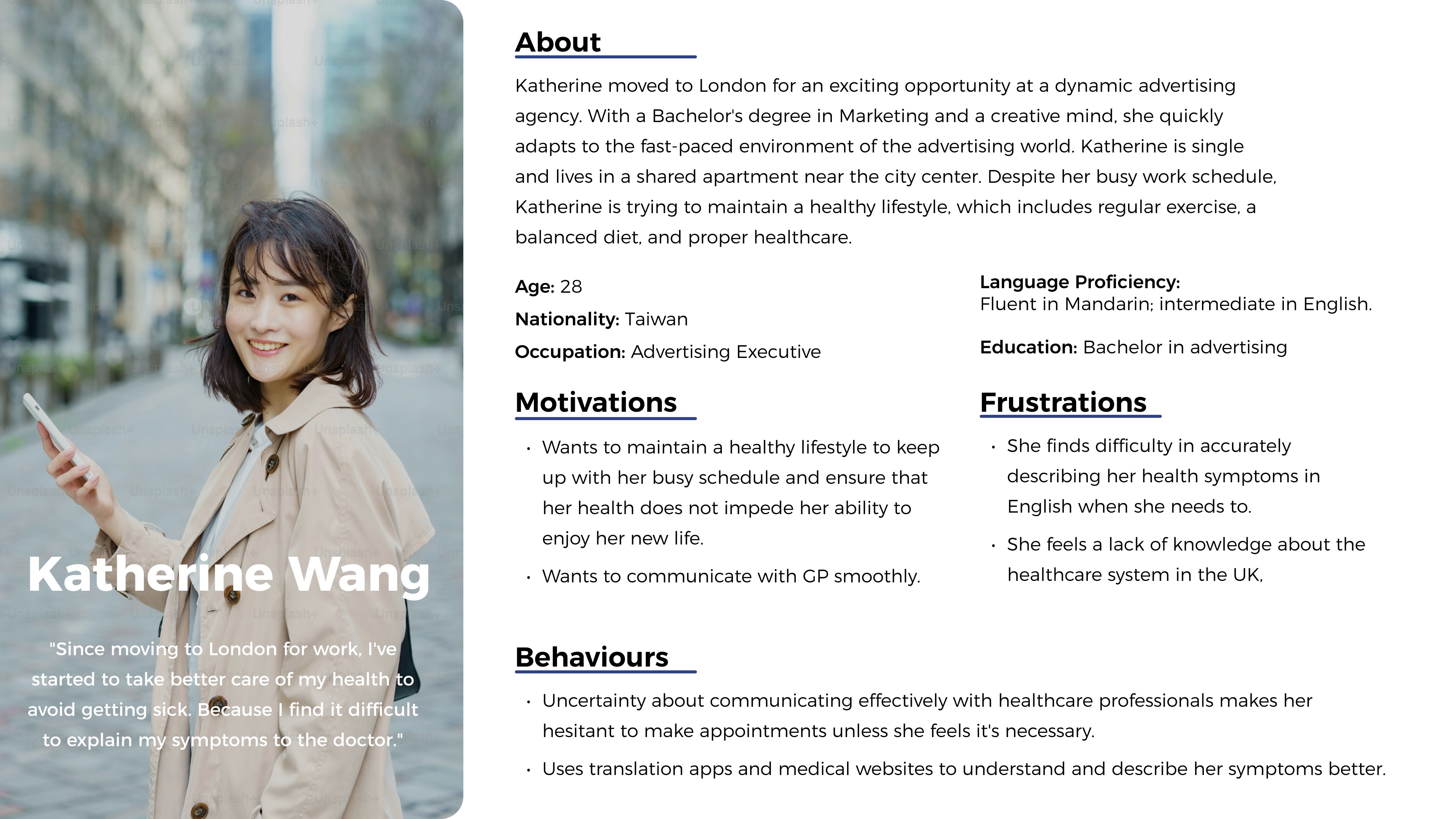
Based on my interviewee's background and secondary research, the persona begins to take shape. With this in mind, I start to build out the details.
Based on my interviewee's background and secondary research, the persona begins to take shape. With this in mind, I start to build out the details.
Before moving to the next process, let's briefly review the current process for accessing GP services and communication:
1) Users must register with their GP either by visiting in person or using the NHS App.
2) They have the option to request interpreter services when visiting the GP.
I observe that GP services now require patients to utilise their online service via the NHS App to schedule appointments or check prescriptions. Therefore, instead of devising an entirely new digital solution, I believe that integrating a specific function into the existing NHS App will be more efficient and useful to both user and GP service needs.
Before moving to the next process, let's briefly review the current process for accessing GP services and communication:
1) Users must register with their GP either by visiting in person or using the NHS App.
2) They have the option to request interpreter services when visiting the GP.
I observe that GP services now require patients to utilise their online service via the NHS App to schedule appointments or check prescriptions. Therefore, instead of devising an entirely new digital solution, I believe that integrating a specific function into the existing NHS App will be more efficient and useful to both user and GP service needs.
Developing Task Flow
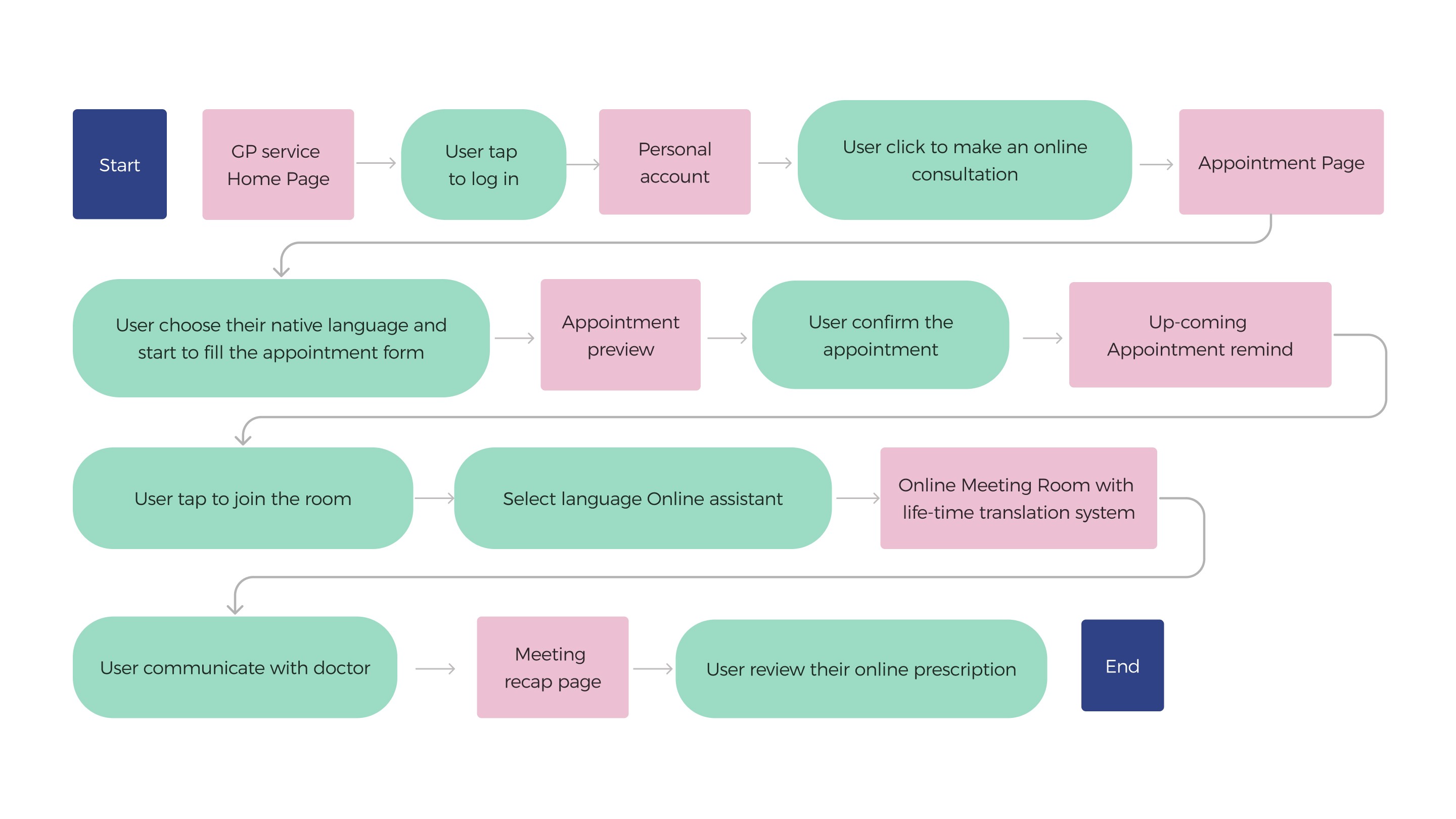
I developed numerous user stories and categorised them into four epics, then began considering which one held the most appeal. Ultimately, I chose to focus on the epic titled Communicate with GP and proceeded to develop the task flow.
Why did I make this choice?
This epic allows me to create valuable functionalities/solutions that will incentivise users to continue utilising the app.
I developed numerous user stories and categorised them into four epics, then began considering which one held the most appeal. Ultimately, I chose to focus on the epic titled Communicate with GP and proceeded to develop the task flow.
Why did I make this choice?
This epic allows me to create valuable functionalities/solutions that will incentivise users to continue utilising the app.
Exploring Sketches
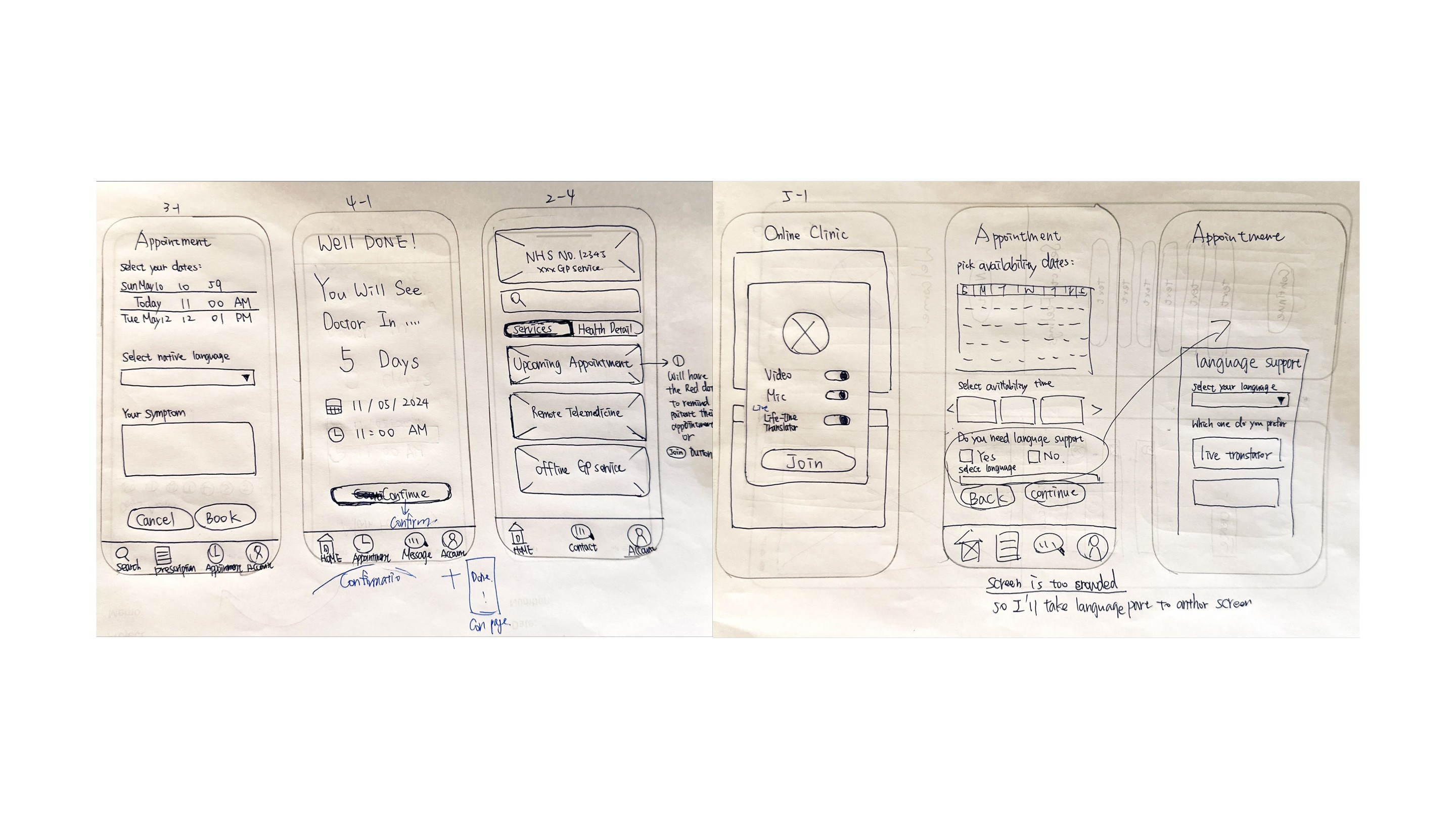
With my task flows and research of UI inspiration, I sketched out the first version.
With my task flows and research of UI inspiration, I sketched out the first version.

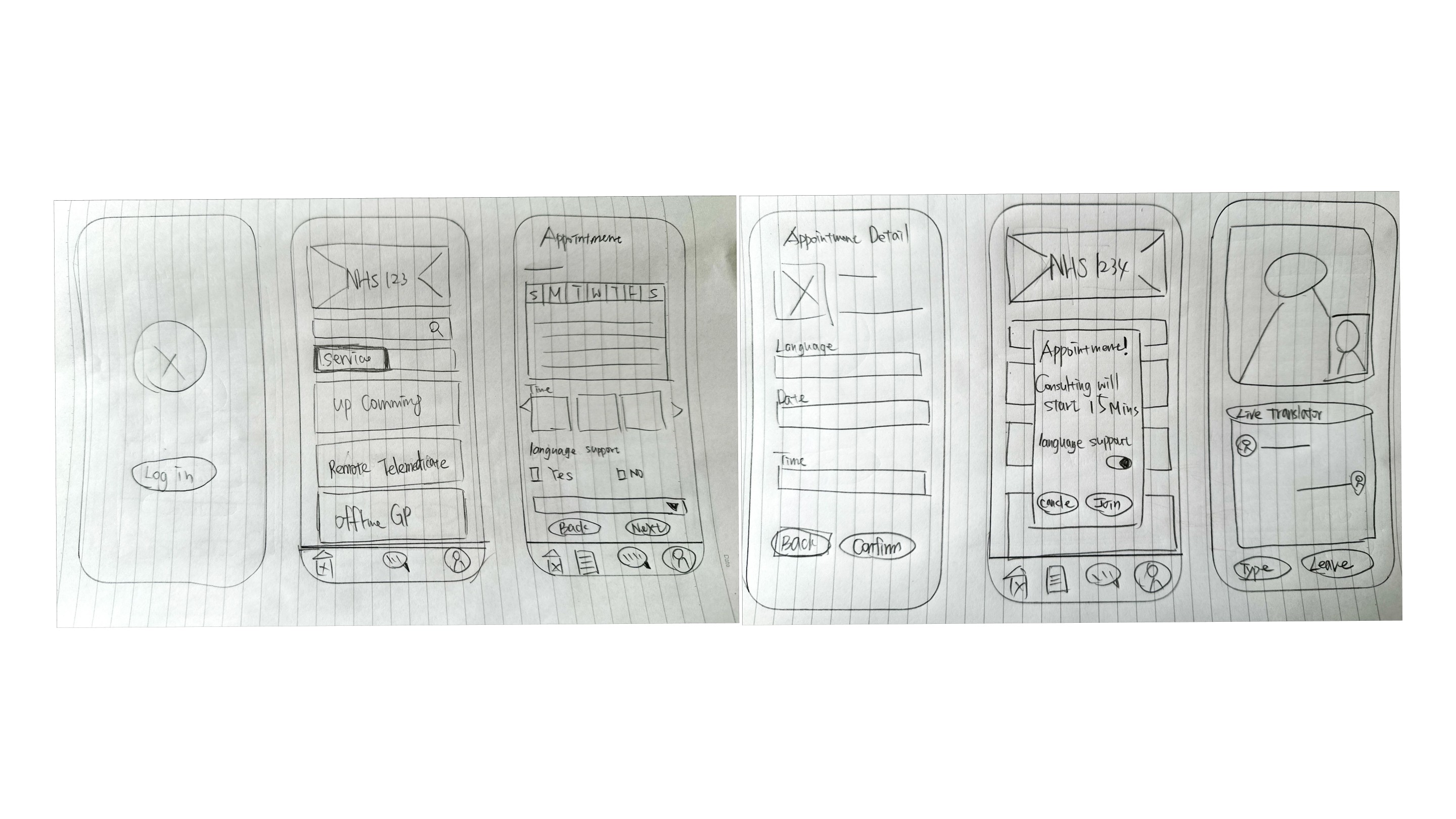
This is the second version of the exploratory sketches. Instead of creating a full task flow, I choose to focus on some of the screens and come up with different ideas.
This is the second version of the exploratory sketches. Instead of creating a full task flow, I choose to focus on some of the screens and come up with different ideas.
Crafting Solution Sketches
During my sketch process, I realised my task flow has some issues that might need to be fixed so that I can make the flow smoother for the user. Instead of back to task flow and revising it, I think the efficient way for me is to show the flow in a later wireframe.
During my sketch process, I realised my task flow has some issues that might need to be fixed so that I can make the flow smoother for the user. Instead of back to task flow and revising it, I think the efficient way for me is to show the flow in a later wireframe.

Turn the paper sketch into a mid-fi wireframe
Turn the paper sketch into a mid-fi wireframe
Turn the paper sketch into a mid-fi wireframe
Building Wireframe Flow
Building out
Wireframe Flow
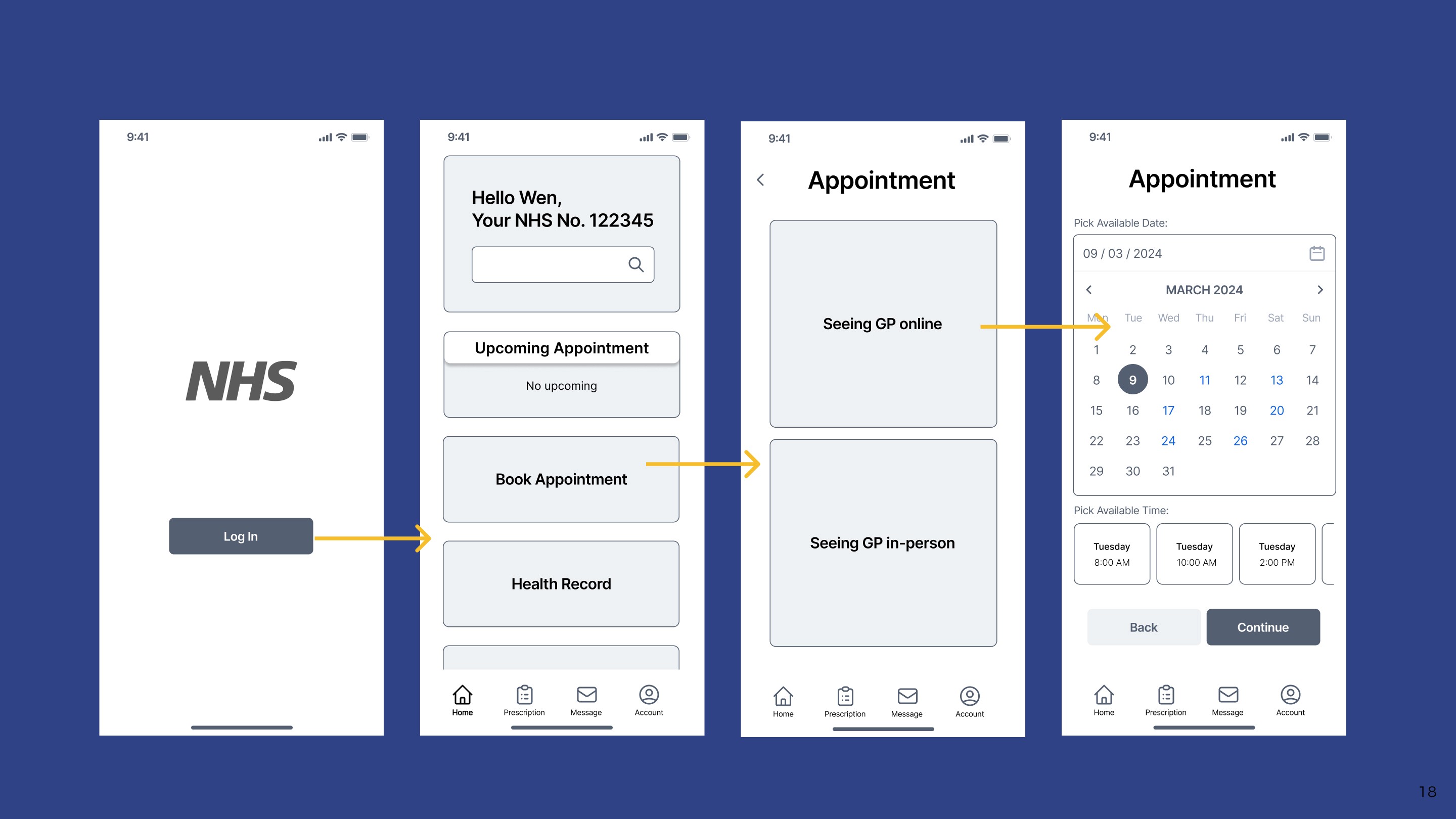
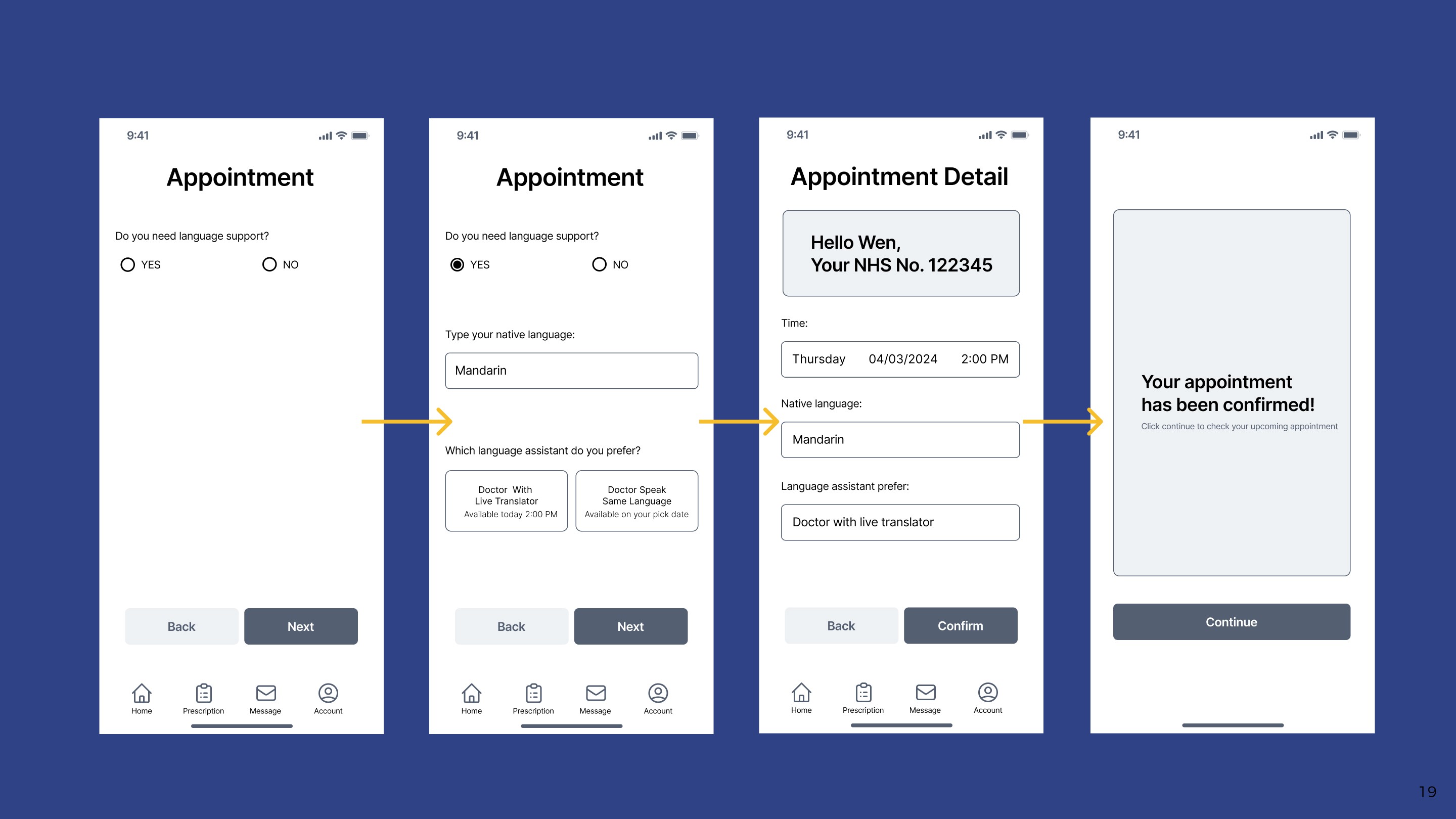
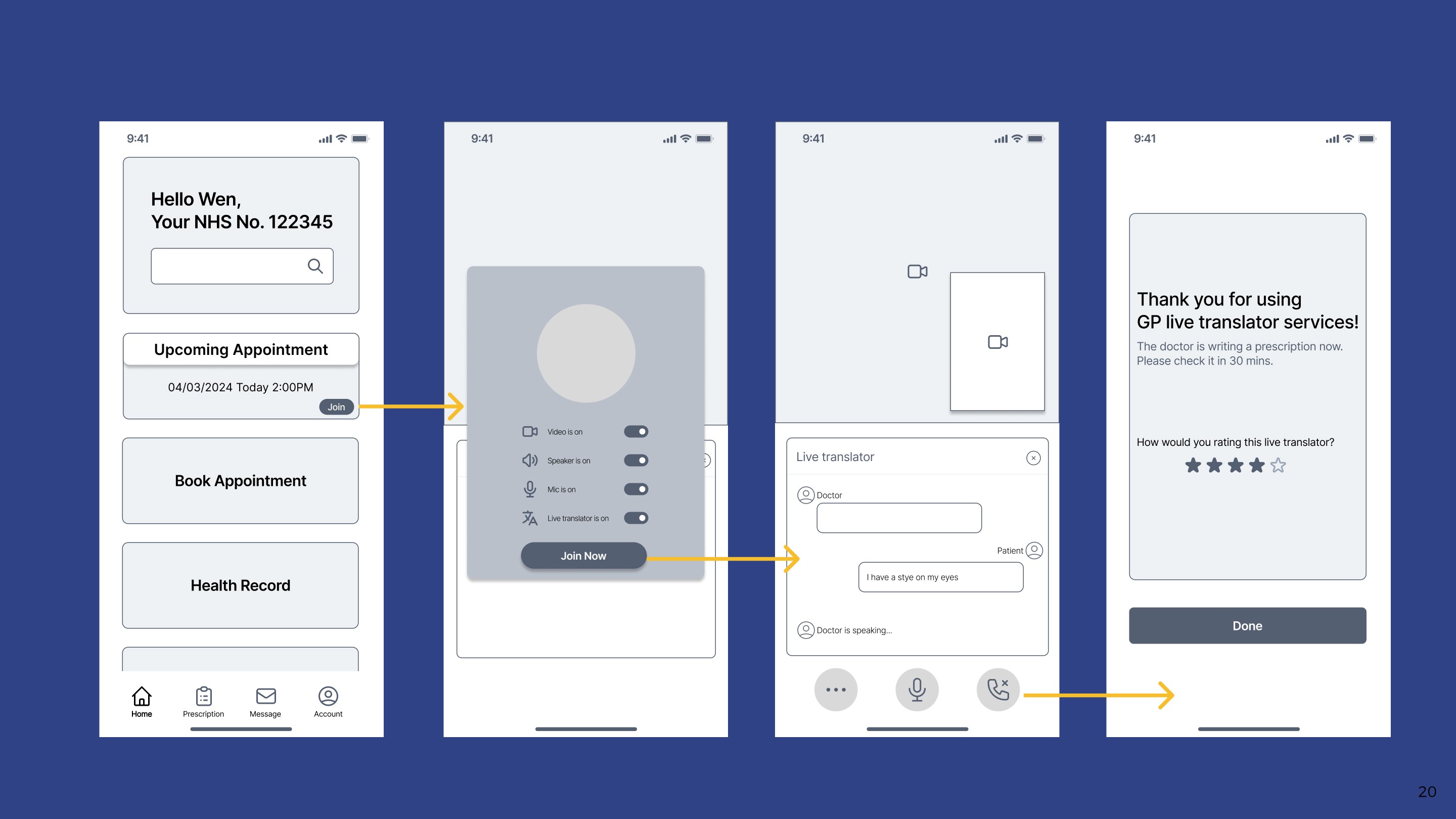
You might see extra screens from my wireframe, that is because I have more comprehensive thinking as well as the discussion with senior people during my wireframe process. Therefore, I add more screens in the wireframe to make the flow clearer.
You might see extra screens from my wireframe, that is because I have more comprehensive thinking as well as the discussion with senior people during my wireframe process. Therefore, I add more screens in the wireframe to make the flow clearer.
Organising Usability Testing
Organising
Usability Testing
I plan to conduct usability tests with about 5 users who are non-native speakers in the UK and have experience accessing GP services to obtain practical, real-time feedback that can be incorporated to improve the design, to provide a more optimal user experience.
I provided a brief scenario and two main tasks for them to have a better understanding of the test.
1) Make an appointment
2) Join the appointment.
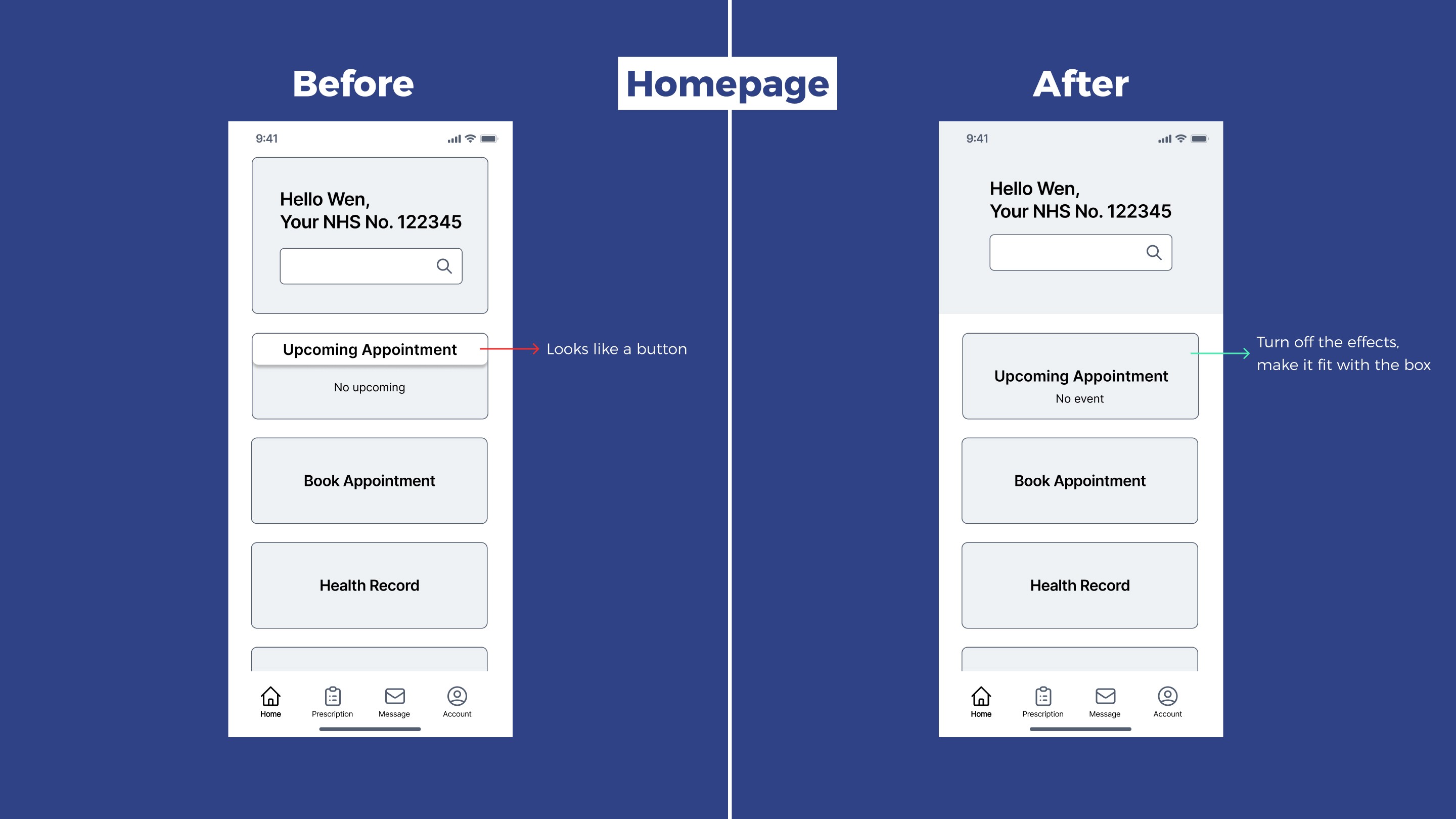
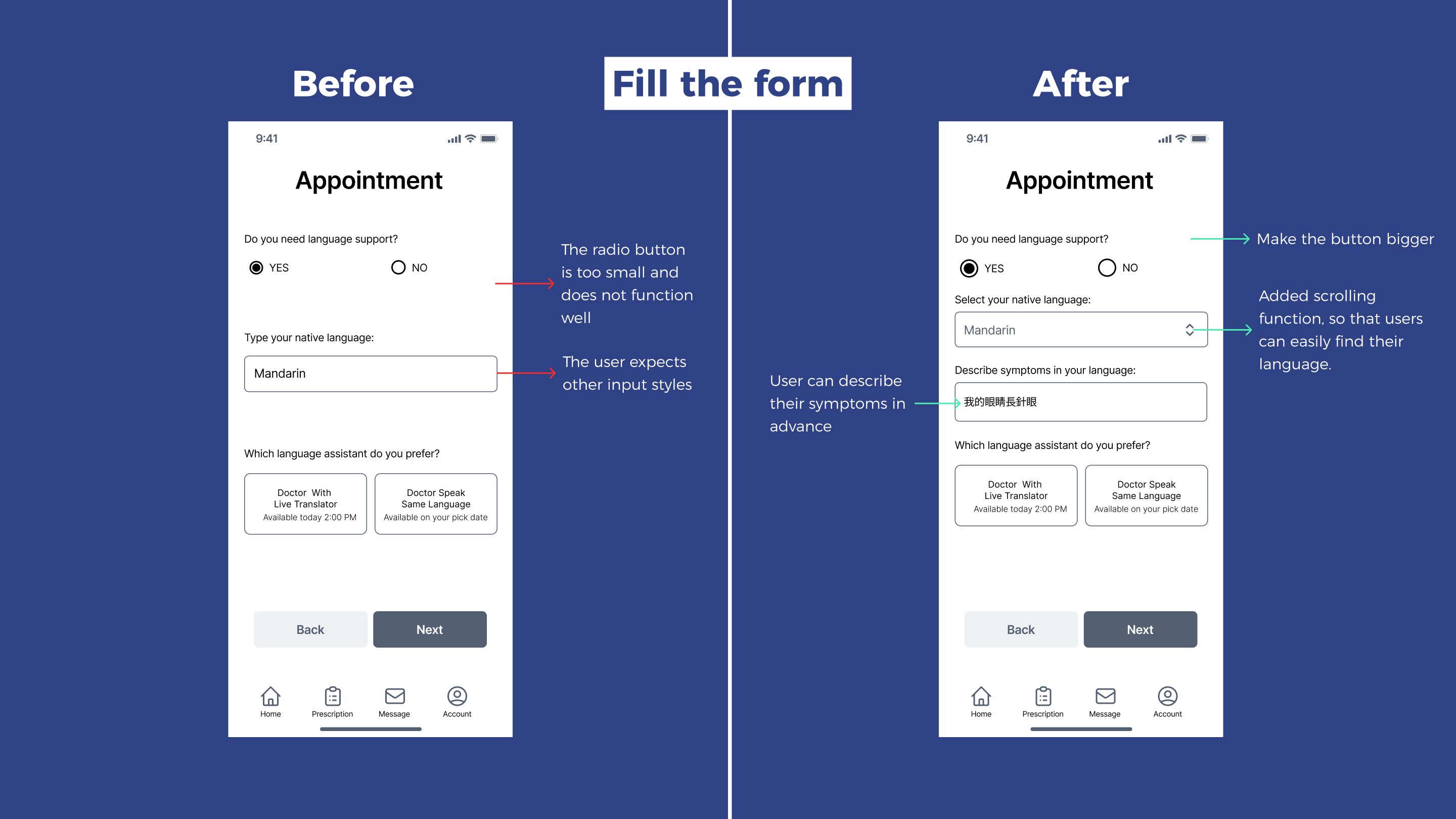
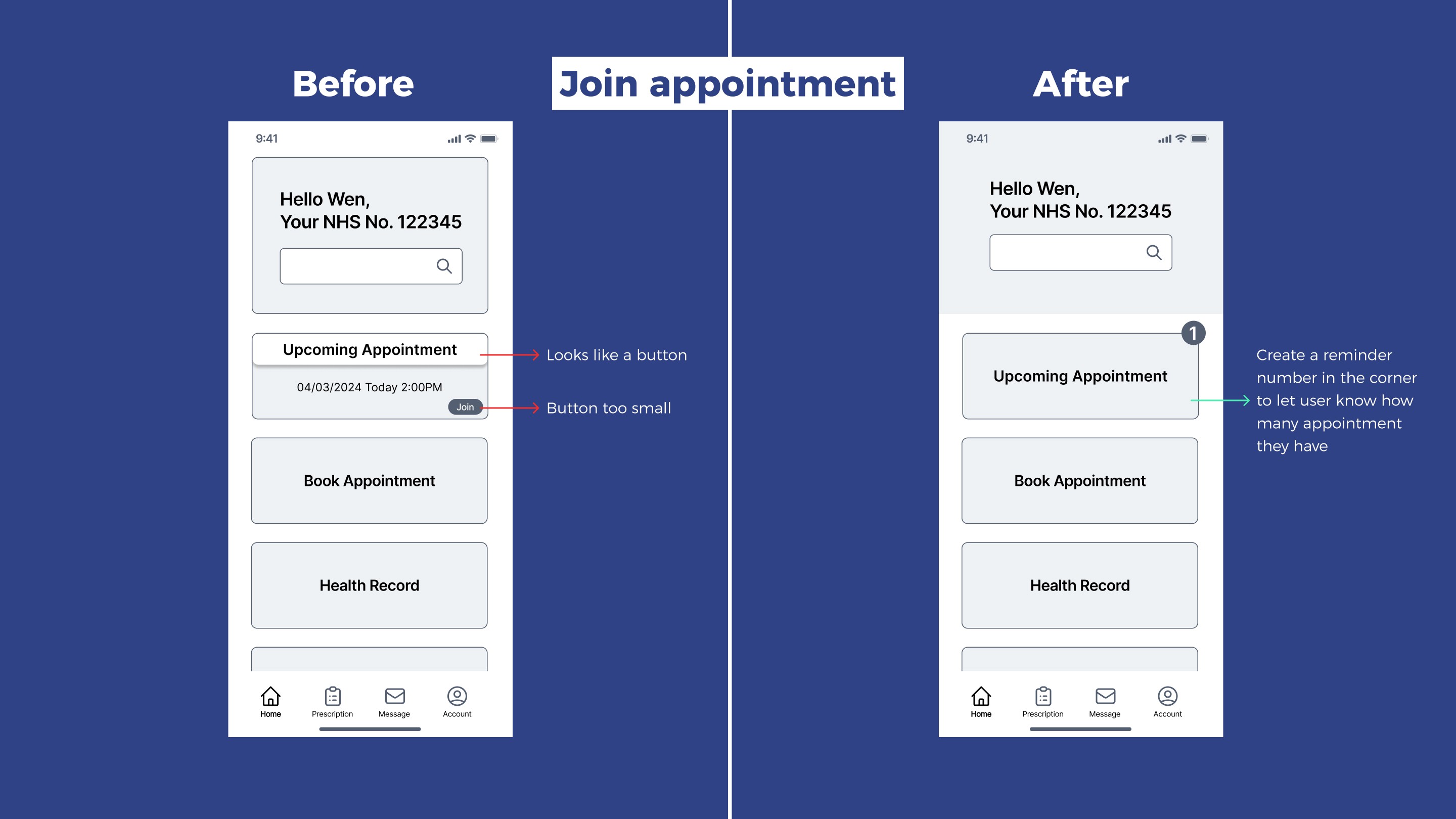
Then, break down the process into 6 small tasks, during the testing, I found out that the beginning and the end were good and easy to understand by users. However, Task 3: Filling out the form and Task 5: starting the Online Clinic might have chances to improve more.
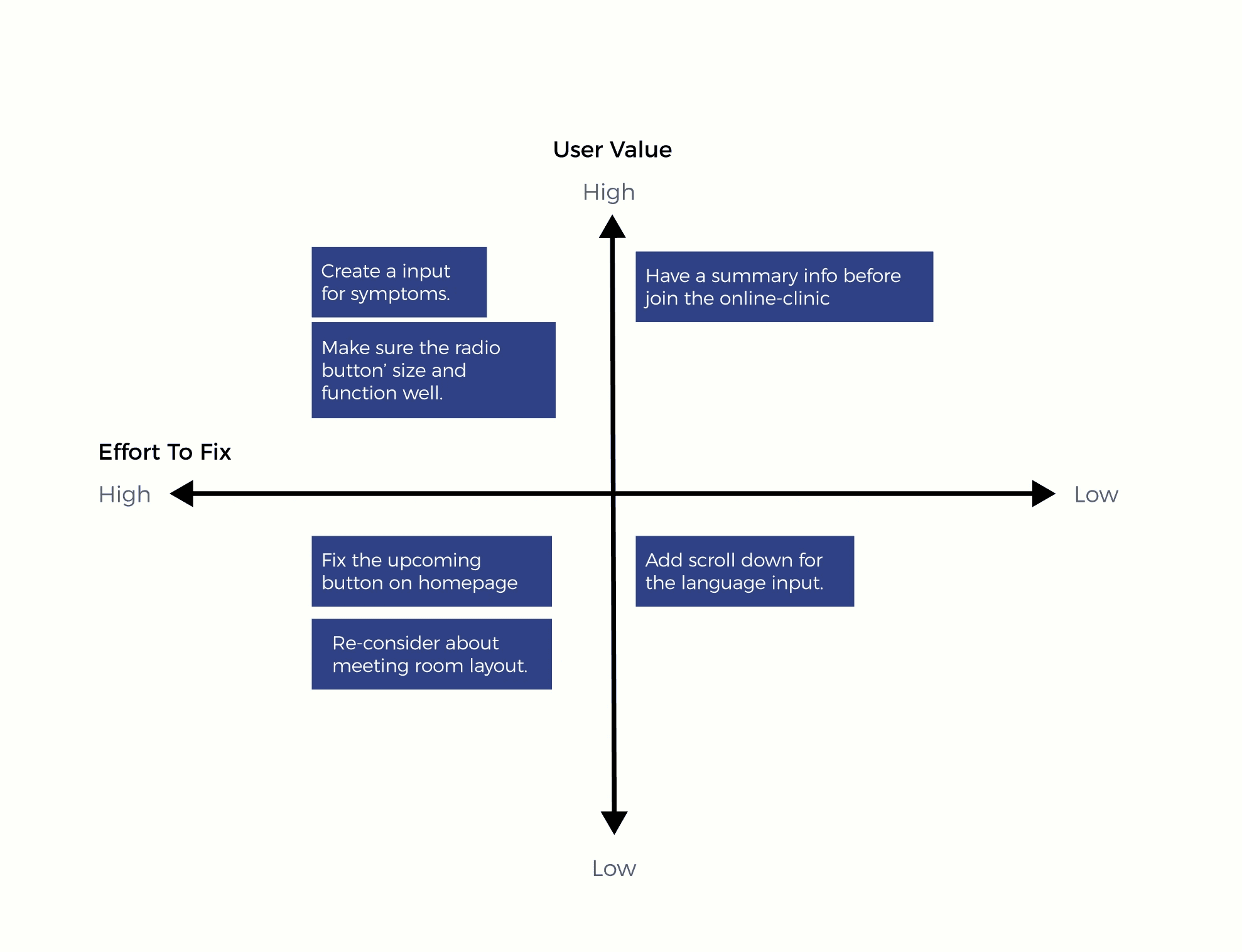
I used a design prioritisation matrix to select the Top 6 usability issues that need to be fixed in a later version.
I plan to conduct usability tests with about 5 users who are non-native speakers in the UK and have experience accessing GP services to obtain practical, real-time feedback that can be incorporated to improve the design, to provide a more optimal user experience.
I provided a brief scenario and two main tasks for them to have a better understanding of the test.
1) Make an appointment
2) Join the appointment.
Then, break down the process into 6 small tasks, during the testing, I found out that the beginning and the end were good and easy to understand by users. However, Task 3: Filling out the form and Task 5: starting the Online Clinic might have chances to improve more.
I used a design prioritisation matrix to select the Top 6 usability issues that need to be fixed in a later version.


Part 3
The soluction Prototype
After refining the wireframe, I developed a second version of the prototype that addressed the issues identified in the initial round of testing, and it was ready to progress to the Hi-Fi design stage.
What does the solution look like?
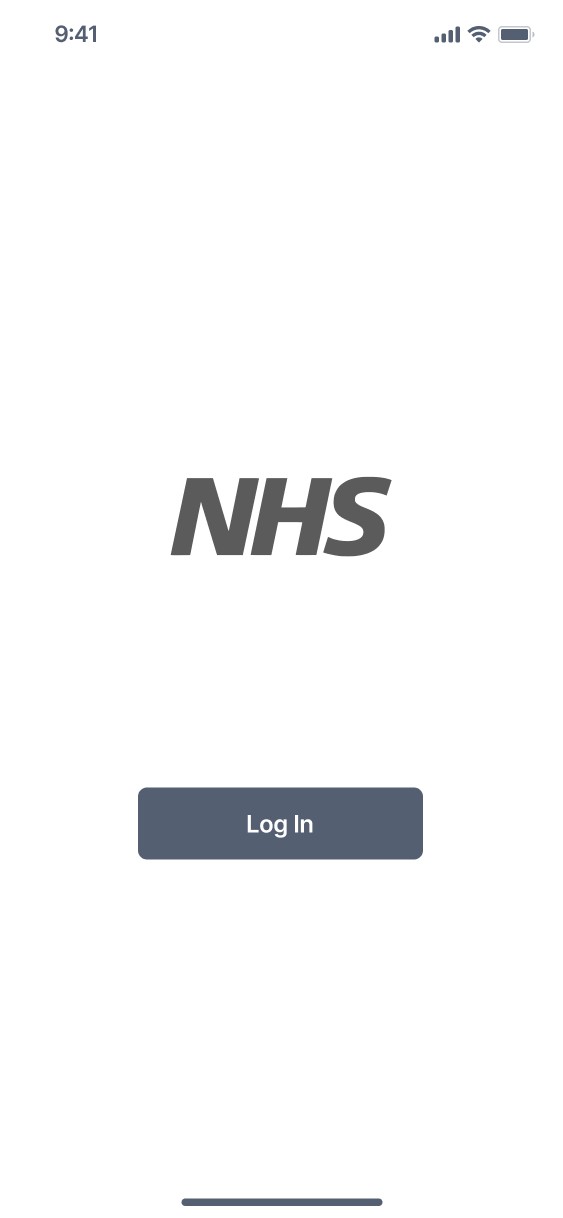
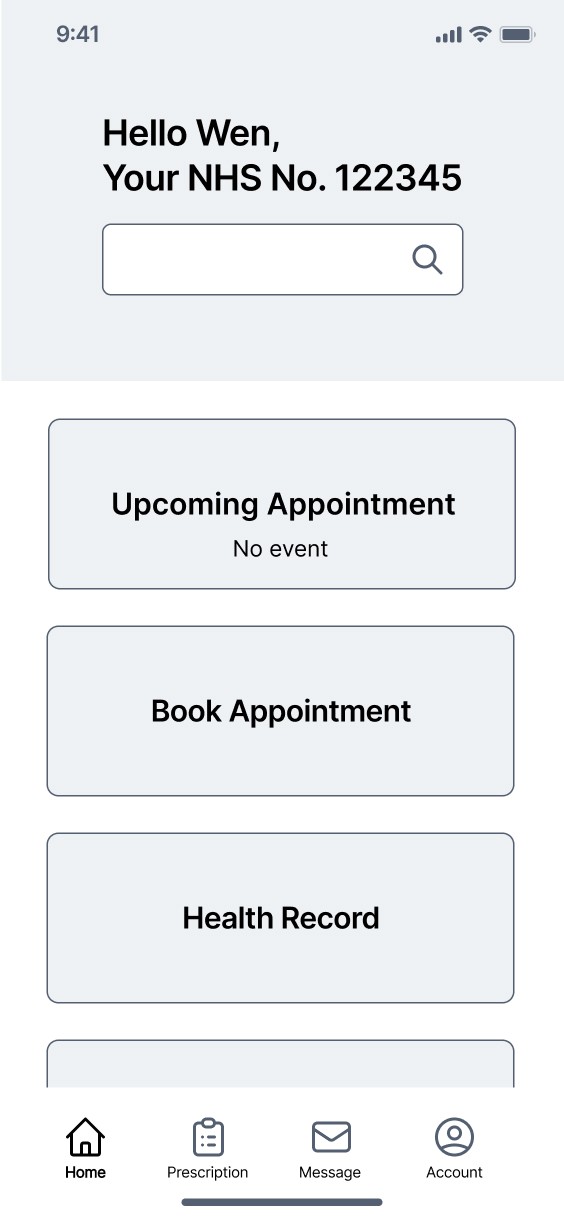
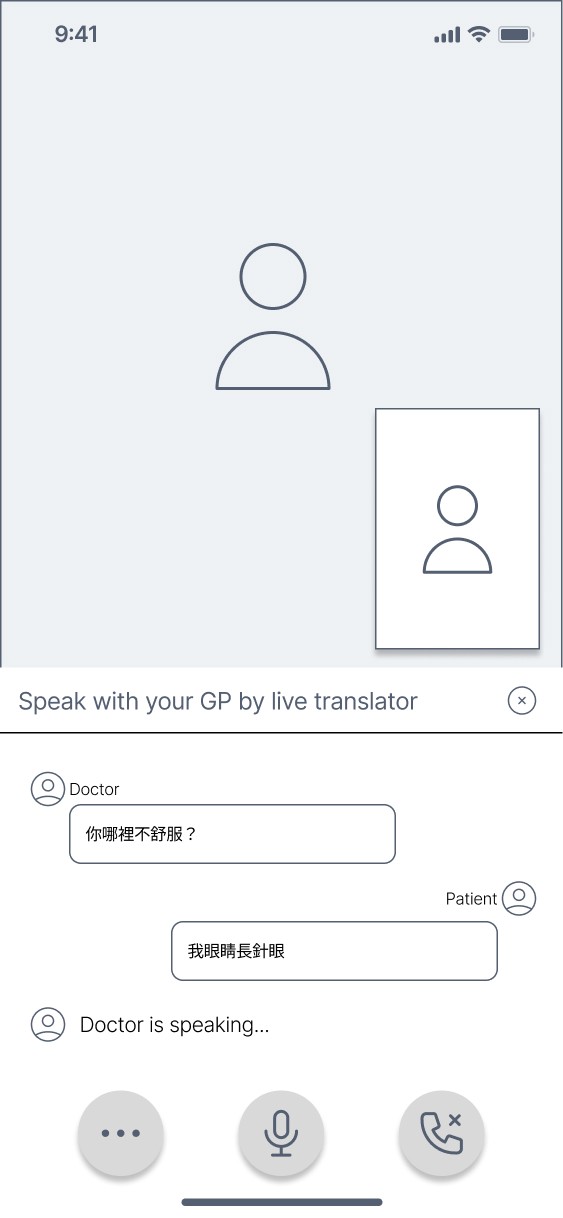
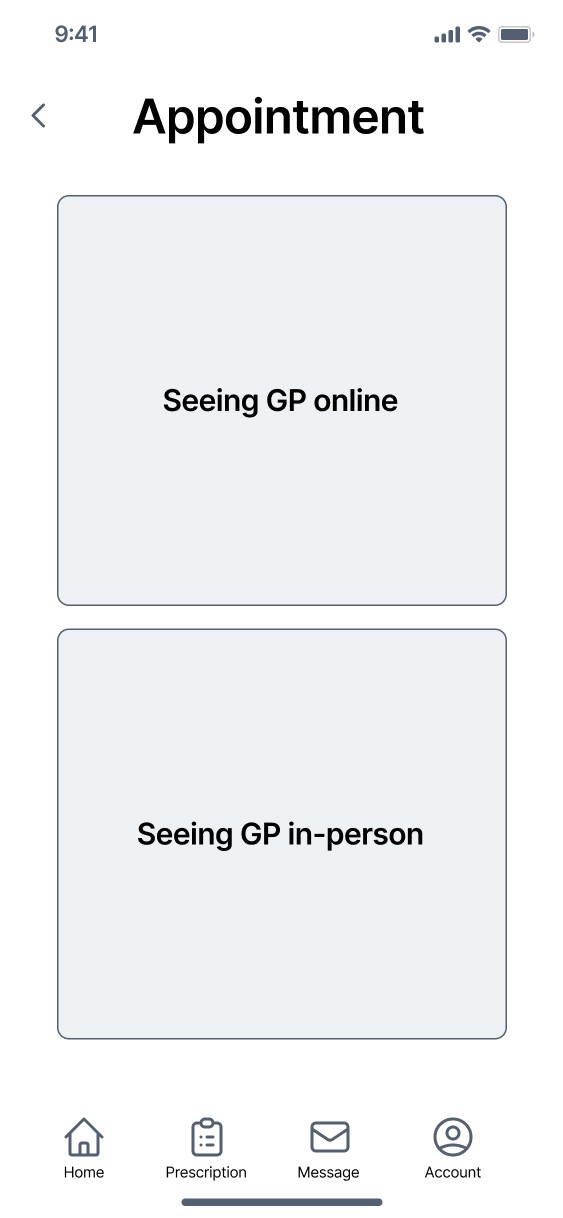
I introduced a new feature to the existing NHS App called the Live Translator Online Clinic, aimed at assisting non-native English speakers to communicate with their GP without the language barrier.
How does it work?
Think of it like the translator app we use. However, this one allows users to converse in their own language and receive live translations. For instance, a patient could speak Mandarin to the doctor, and the doctor would see the translation in English in real time. Then, the doctor could respond in English, and the patient would see the translation back into Mandarin. This way, both parties can communicate without the need for an interpreter or any potential misunderstandings.
After refining the wireframe, I developed a second version of the prototype that addressed the issues identified in the initial round of testing, and it was ready to progress to the Hi-Fi design stage.
What does the solution look like?
I introduced a new feature to the existing NHS App called the Live Translator Online Clinic, aimed at assisting non-native English speakers to communicate with their GP without the language barrier.
How does it work?
Think of it like the translator app we use. However, this one allows users to converse in their own language and receive live translations. For instance, a patient could speak Mandarin to the doctor, and the doctor would see the translation in English in real time. Then, the doctor could respond in English, and the patient would see the translation back into Mandarin. This way, both parties can communicate without the need for an interpreter or any potential misunderstandings.